
What is a Red Dot Sight? A Beginner’s Guide
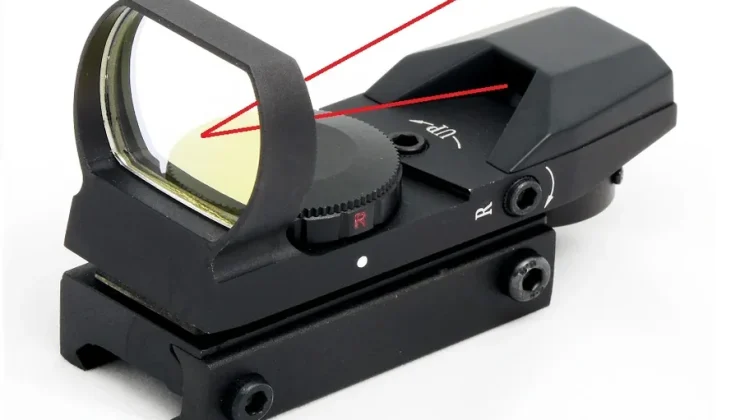
A red dot sight is one of the most popular optics upgrades for shooters of every skill level, and for good reason. Unlike traditional iron sights, which require you to align a front and rear post, a red dot sight projects a small illuminated dot onto a lens. You simply place that dot on your target and pull the trigger. The result is faster target acquisition, easier use for shooters with less-than-perfect vision, and a shooting experience that feels far more intuitive than lining up mechanical sights.
How a Red Dot Sight Works
At its core, a red dot sight uses an LED that projects a light source onto a specially coated lens. That coating reflects the red (or sometimes green) dot back to your eye while allowing ambient light to pass through normally. This means you’re looking through clear glass at your target while a glowing dot appears to float in your field of view. Because the dot is projected rather than physically etched onto glass like a scope’s reticle, it doesn’t require precise eye alignment the way traditional sights do. This is often called “unlimited eye relief,” and it’s one of the biggest advantages red dots offer over both iron sights and magnified scopes.
Types of Red Dot Sights
Not all red dot sights are built the same. Reflex sights are the most common type, using a single lens and LED to create the dot. Holographic sights use a more complex laser system to project a reticle, often offering more reticle options but at a higher price point. Prism sights sit somewhere in between, offering fixed magnification along with an illuminated reticle. Beginners typically start with a basic reflex-style red dot sight because it’s affordable, simple to operate, and reliable across a wide range of firearms, from pistols to rifles to shotguns.
Why Shooters Choose Red Dots
The biggest draw of a red dot sight is speed. Because you don’t need to align two separate points like you do with iron sights, your eyes naturally focus on the target while the dot appears to hover over it. This is especially valuable in situations where quick target acquisition matters, whether that’s competitive shooting, home defense, or hunting fast-moving game. Red dots are also popular because most models work with both eyes open, which improves situational awareness compared to squinting down a barrel with one eye closed.
What to Look for as a Beginner
If you’re new to red dot sights, a few features matter more than others. Battery life is important since most red dots run on a small battery and you don’t want your sight dying mid-hunt or mid-match. Look for models with automatic shut-off or motion-activation features that conserve battery when the firearm isn’t in use. Durability matters too, especially if you’ll be mounting the sight on a rifle that sees recoil or rough handling; a sight rated for shock resistance and weather sealing will hold up better over time. Dot size, measured in MOA (minutes of angle), affects precision versus speed. A smaller dot, such as 2 MOA, is better for precision shooting at distance, while a larger dot, like 6 MOA, is faster to acquire up close.
Mounting and Zeroing
Once you’ve chosen a sight, it needs to be mounted securely and zeroed to your firearm. Most red dot sights use a standard rail mount, though pistol-specific models often require a milled slide or an adapter plate. Zeroing simply means adjusting the windage and elevation dials so the dot lines up with where your bullet actually strikes at a given distance. This process typically takes a few rounds and some patience, but once it’s dialed in, it should hold zero through normal use.
Getting Started
For beginners, the learning curve with a red dot sight is refreshingly short compared to other optics. Most shooters find that within a single range session, they’re acquiring targets faster and shooting more consistently than they did with iron sights. Whether you’re setting up a home defense pistol, building out a hunting rifle, or just want a more modern shooting experience, a red dot sight is a worthwhile upgrade that pays off the first time you use it.