
What Happens When a Nursing Home Resident Is Transferred to Another Facility?
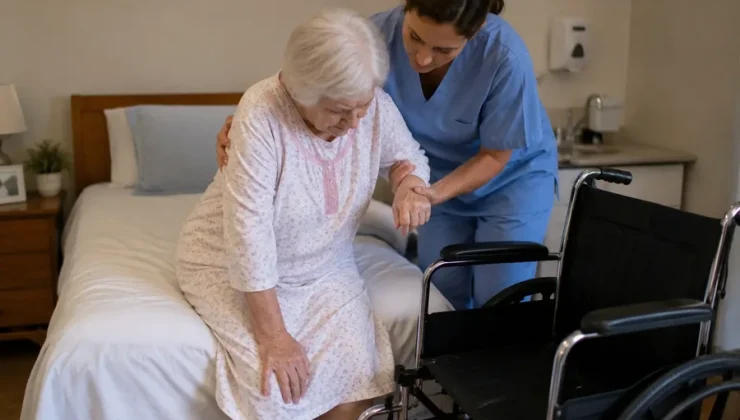
Nursing home transfers are fairly commonplace in the care world. However, what feels like “business as usual” for nursing home staff can represent a true upheaval of one’s life for an elderly nursing home resident. A transfer must be done gingerly. There are also serious legal implications for the facility initiating the transfer.
Families often wonder what to expect from nursing home transfers. They may also have questions about why a nursing home transfer is necessary. Common reasons why patients are transferred from one nursing home to another include:
- A nursing home decides that it’s unable to meet care needs or tend to the medical seriousness of the patient.
- A patient has improved to the point that they are able to move to a nursing home with less medical care/supervision.
- A situation or event at the nursing home has put a patient in harm’s way.
- Failure to pay has resulted in the patient being evicted from the nursing home.
- Family members would prefer to place a patient in a home that is closer to where they live.
- A nursing home is closing.
The protocol for how a nursing home transfer happens is pretty standard regardless of the reason for the transfer. In this post, we’ll lay down some of the basics of what your family can expect when going through a nursing home transfer. It’s important to remember that a patient deserves top-notch care on both ends of the transfer. The fact that a nursing home will no longer be serving a patient after a transfer is not an excuse for mistreatment or laxity regarding laws and standards.
Notification
Your family may be requesting a transfer. However, this is less common than a facility-triggered move. If the nursing home is initiating the transfer, the staff will generally be required to provide at least a 30-day notice. The specifics of what’s required can vary by state and county. It’s a good idea to talk to an experienced nursing home abuse lawyer like those at Peterson Law Office if you feel like your family member is being unfairly “kicked out” of a facility for a reason that seems unjustified.
Facilities are generally required to provide notice in writing. They are also required to provide a detailed reason for the transfer. Patients and their families should also be provided with instructions for how to appeal the decision.
Anyone who has received notification of a nursing home transfer needs to be familiar with the Nursing Home Reform Law of 1987. This law prohibits nursing homes from transferring or discharging residents without a permissible reason. The responsibility to justify a transfer or discharge using a permissible cause falls on the nursing home. Nursing home residents and family members should feel empowered to reference this law when they are faced with a change of care.
Physician Approval
A nursing home transfer isn’t just a logistical decision. It can impact the health of the patient for the rest of their life. This is why getting physician approval for the transfer is critical. A physician can determine if a proposed nursing home transfer is actually in the best interest of the patient. They look at things like the level of care being provided at the current nursing home, the care available at the proposed facility, and the stress that would be created by the physical act of transferring from one facility to another.
Care Planning
Family members should ask about options for transfer. The current nursing home may recommend a specific facility they have an agreement with regarding transfers. It may also be possible to tour several facilities that offer the level of care needed for a patient in order to choose the one that is pleasant, closest to family members, and equipped for the needs of the patient.
The nursing home staff should provide a plan for continued care leading up to the transfer, during the transfer, and after the transfer. Family members may need to spend time coordinating with both the current facility and new facility to ensure a seamless transition. The process can be more intensive if the nursing home patient is reliant on medications or specialized medical support to remain healthy.
Family members need to verify that the facility has the resources available to meet the needs of the patient. This includes things like specific medical equipment, health programs, and qualified staff members.
Records Transfers
Nursing home staff should be proactive about transferring records to the new facility. Failure to properly transfer all records and documents on time can result in gaps in care. In addition, there needs to be a conversation about the financial aspect of the transfer. This often takes coordination with the new nursing home and the patient’s benefits provider.
Final Thoughts
Don’t assume a proposed nursing home transfer is set in stone. Patients and families who are not happy about a transfer have resources. Nursing homes and care facilities are required to provide patients with an opportunity to appeal the decision. Of course, some families request nursing home transfers for reasons that include seeking more specialized care or moving a loved one closer to family.
The bottom line is that nursing homes need to follow legal protocols regardless of who initiates the transfer. While this looks like a logistical change on the surface, the reality is that nursing homes must provide proper assessments and in-depth plans for continuation of care to ensure that a transfer does not negatively impact the health of a resident.