Securing OT and Industrial Infrastructure: New Cybersecurity Frontier
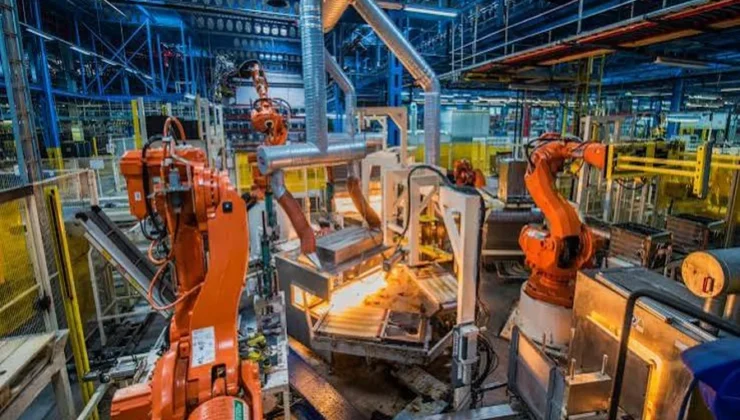
Digital transformation has permanently erased the boundaries between corporate networks and shop floors. Previously, industrial automated control systems (ICS) and operational technologies (OT) functioned in isolated environments. Today, the concept of the “air gap” has become a myth due to the rapid growth of the Industrial Internet of Things (IIoT) and the need for real-time big data analytics.
This convergence has unlocked unprecedented opportunities for business optimization, but it has simultaneously introduced severe risks. Modern IT Security can no longer be limited to protecting only office computers and servers. The industrial sector has become the new critical frontier of cyber defense, where a successful attack threatens not just data leaks, but physical destruction and critical infrastructure shutdowns.
Why the OT Environment Has Become a Primary Target for Hackers
Industrial facilities, such as power plants, water utilities, factories, and logistics hubs, are highly attractive targets for cybercriminals. Attackers’ motives have evolved from simple digital vandalism to large-scale cyber espionage and financial blackmail.
There are several key reasons why operational technologies remain highly vulnerable:
- Legacy Equipment: Programmable logic controllers (PLCs) and SCADA systems are often operated for decades without receiving vital security updates.
- Lack of Encryption: Many legacy industrial protocols (e.g., Modbus or Profibus) were originally designed without any cybersecurity requirements in mind.
- The Human Factor: Plant personnel often possess deep engineering expertise but lack basic digital hygiene skills required in modern connected networks.
Stopping a production line for even a few hours can cost a company millions of dollars. Cybercriminals actively exploit this vulnerability using ransomware, knowing that businesses will be desperate to pay any amount to restore operations quickly.
AI tech consulting helps organizations identify, implement, and optimize artificial intelligence solutions that align with their business goals. As companies seek to improve efficiency, automate processes, and gain deeper insights from data, expert guidance becomes increasingly valuable.
Key Challenges at the Intersection of IT and OT
The process of integrating these two previously independent worlds creates fundamental conflicts in security priorities. This misalignment significantly complicates the construction of a unified defense perimeter.
Priority Conflict: CIA Triad vs. AIC
In traditional IT, confidentiality is the top priority, followed by integrity, and finally availability. In the operational technology (OT) environment, this hierarchy is completely inverted. Continuous processes and human safety (Availability and Safety) always come first. An engineer will likely block a security patch if there is even a minimal risk of causing a system glitch.
Specifics of Industrial Software
Patching in an OT environment is a unique pain point for administrators. Updating software on critical assets requires extensive testing and carefully coordinated downtime windows. Sometimes, replacing a vulnerable component is entirely impossible because the equipment manufacturer has long ceased its support.
Strategy for Building a Reliable ICS/OT Defense
Protecting industrial infrastructure requires a shift away from traditional perimeter-based security methods. Instead, organizations must implement a comprehensive defense-in-depth approach.
Here are the foundational steps every modern enterprise needs to implement:
1. Deep Network Segmentation
Utilizing the Purdue Model architecture allows for a clear logical separation of network levels. Corporate systems must be strictly isolated from production zones using demilitarized zones (DMZs) and industrial Next-Generation Firewalls (NGFW).
2. Real-Time Monitoring and Visibility
You cannot protect what you cannot see. Implementing specialized OT intrusion detection systems (IDS) allows for passive network scanning without disrupting technological processes. These solutions detect anomalous equipment behavior or unauthorized attempts to modify controller configurations.
3. Remote Access Control
Third-party contractors and maintenance engineers frequently connect to systems remotely. Organizations must entirely move away from standard legacy VPNs in favor of Zero Trust architectures and Privileged Access Management (PAM) solutions. Every session must be time-bound and fully recorded for subsequent audits.
The Future of Industrial Cybersecurity: What to Prepare For
Threats are becoming more sophisticated, and attackers’ tools are growing increasingly advanced. Advanced Persistent Threat (APT) groups and cybercriminals are already actively leveraging artificial intelligence to discover zero-day vulnerabilities in industrial software.
To stay ahead of attackers, companies must invest in establishing Unified Security Operations Centers (Unified SOC). This approach enables the aggregation of telemetry from both IT and OT sectors into a single pane of glass. Only by seeing the complete picture can teams timely detect and mitigate a complex, multi-vector attack.
Furthermore, changing the internal organizational culture is vital. Training engineers in cybersecurity basics and educating IT specialists on the specifics of physical processes is the only way to build a resilient ecosystem.
Conclusions
Securing OT infrastructure is not a one-time project, but a continuous process of adaptation to evolving threats. The days when a locked server room door guaranteed a factory’s safety are gone forever.
Today, the security of industrial systems is a matter of business viability and national security. Integrating modern security practices, ensuring strict segmentation, and continuously analyzing anomalies will help minimize risks and confidently drive industrial evolution forward.