
How to Name Your Barbershop (And Why It Matters More Than You Think)
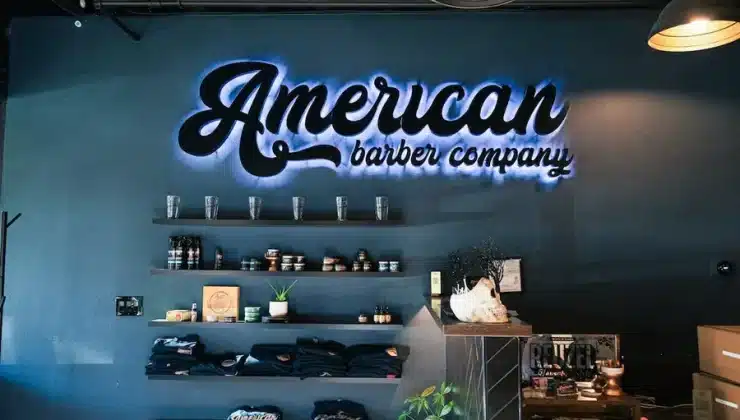
Most barbers don’t spend much time thinking about their shop’s name until they absolutely have to — usually about 72 hours before they need to file paperwork. The name gets chosen quickly, often defaulting to something personal (their own name, their neighborhood, a reference that feels meaningful to them) without much thought about how it functions as a business asset.
This is a significant missed opportunity. Your barbershop’s name is doing more work than you might realize: it’s your first impression, your SEO signal, your social media handle, your word-of-mouth shorthand, and a core component of your brand identity. Getting it right matters.
Here’s a practical, thorough guide to naming a barbershop — covering the strategic thinking, the common mistakes, and the mechanics of locking something down properly.
What a Good Barbershop Name Actually Does
Before getting into naming frameworks, it’s worth being clear about what the name needs to accomplish.
It needs to communicate positioning. “Classic Cuts” communicates something very different from “The Studio” or “Apex Grooming.” Your name sets an expectation before a client walks in the door. That expectation should align with your actual service style, clientele, and price point. A high-end men’s grooming brand with a folksy, old-town name is working against itself.
It needs to be findable online. Google Maps, Instagram, and word-of-mouth are how new clients find barbers now. A name that’s too generic is hard to search for and impossible to own on social media. A name that’s too obscure requires constant explanation. The sweet spot is distinctive enough to be memorable and own-able, but clear enough that someone who hears it once can find you.
It needs to hold up. You might outgrow a name that’s too location-specific if you expand. You might regret a name that’s too trend-dependent in five years. The best names have some longevity built in.
It needs to work visually. The name will appear on a sign, business cards, a logo, a social media profile, and increasingly, on branded merchandise. Long names and names that don’t abbreviate or logomark well create practical friction.

Naming Frameworks That Work for Barbershops
There are several reliable approaches, each with different strengths.
The founder’s name. Using your own name — “Torres Barbershop,” “James & Co.,” “The Malik Studio” — works well when you are genuinely the brand. If you’re building around your personal reputation, your name as a barber, and your intention to be the primary draw indefinitely, this makes sense. The limitation is that it’s harder to sell or expand beyond yourself. A shop named after you is really a personal services business, not a scalable brand.
The craft or tradition angle. Names that reference the heritage and craft of barbering — “The Straight Razor,” “Old Line Barber Co.,” “Ironwood Grooming” — work well for shops positioning in the traditional, elevated, or vintage-inspired space. They communicate quality and intentionality without needing to explain themselves. They also tend to be more ownable than purely descriptive names.
The local identity angle. Names tied to neighborhood, street, or city identity — “The Lakeview Barber,” “East Side Cuts,” “Wicker Park Grooming Co.” — work well for shops that want to be a neighborhood institution rather than a destination brand. The tradeoff is that they can feel limiting if the shop grows or relocates.
The conceptual angle. Abstract or concept-driven names — “Parallel,” “Meridian,” “The Fifth” — work well for shops with a strong aesthetic identity and a clientele that responds to a more editorial sensibility. These require more brand-building work to communicate what the shop is, because the name doesn’t carry that information inherently.
The service descriptor. Simple, clear, and searchable — “Men’s Cuts Chicago,” “Precision Barbershop,” “Sharp & Clean” — these prioritize function over personality. They’re not exciting, but they’re hard to misunderstand and tend to perform well for local search.
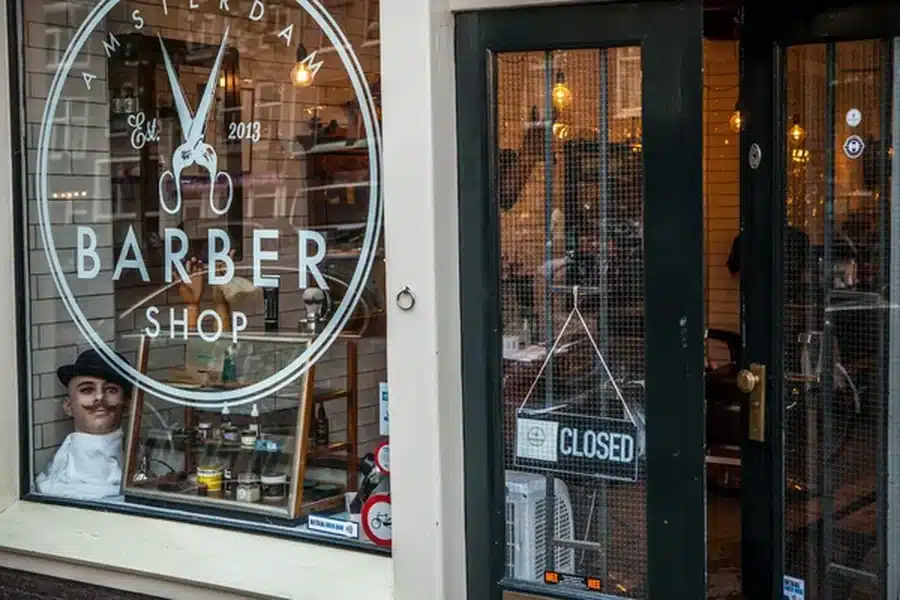
The Mechanics: Checking Availability and Locking It Down
Once you have a shortlist of names you like, there’s a specific sequence to follow before you commit.
Domain availability. Check whether yourname.com is available. If it’s not, decide whether the .com matters to you and what alternatives work (.co, .studio, a hyphenated version). Generally, if the .com of your exact name is taken, it’s worth either modifying the name or having a strong reason why you don’t need it.
Social media handles. Check Instagram, TikTok, and Facebook simultaneously. Inconsistent handles across platforms create friction. Ideally, you want the same handle everywhere. This is often the most constraining check — Instagram availability rules out a lot of names that look available elsewhere.
Trademark search. Run a basic search on the USPTO (United States Patent and Trademark Office) database to check whether your intended name is registered as a trademark in the beauty/personal services category. This step gets skipped constantly and creates expensive problems later. A name that’s clear for local use in one city can still infringe on a registered trademark.
State business registration. Check your state’s business name database to ensure the name isn’t already registered by another business entity in the same category. Your state’s Secretary of State website is where this search happens.
Google search. This sounds obvious, but do a thorough search of the name plus your market. What comes up? Is there a shop in another state with the same name that dominates results? Could that create confusion?
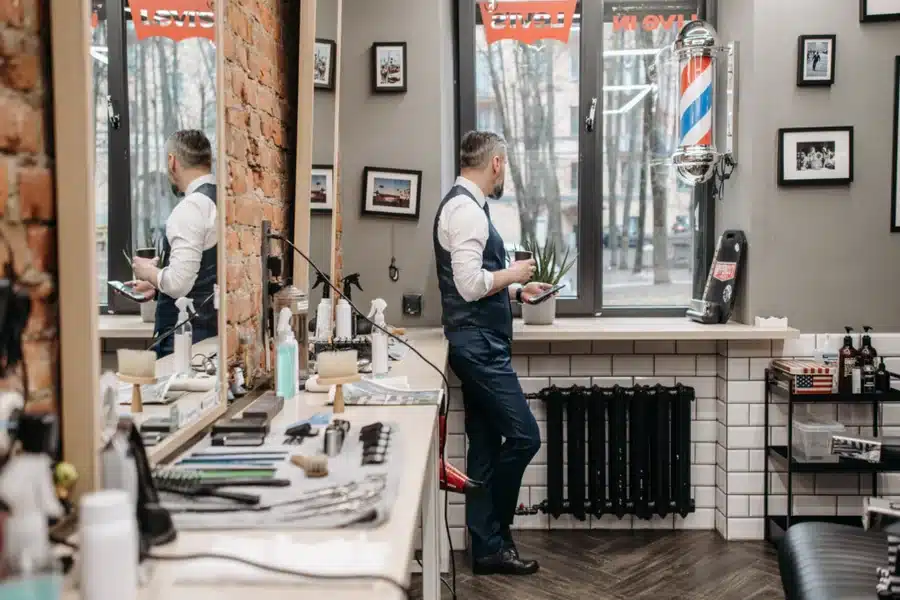
The Branding Foundation That Follows
Once the name is chosen and secured, it becomes the anchor for everything else: the visual identity (logo, colors, typography), the social media presence, the way you describe yourself to clients, and ultimately the reputation you build around it.
Barbers who have trained seriously — who understand that a career in this industry is a professional practice, not just a trade — tend to approach the business side with the same seriousness. The business knowledge to do this well is something the best barbering programs teach alongside the technical skills. If you’re still in the training phase and thinking through both the craft and the business side, exploring a structured barber program that covers both is worth considering seriously.
Common Naming Mistakes to Avoid
Choosing a name that’s too similar to an existing local competitor. You want differentiation, not confusion. Do a local search before finalizing.
Making the name too specific too early. “Southside Fades” is harder to grow beyond its original context than something more portable.
Choosing a name you’ll outgrow. If your vision is a multi-location brand or a product line, think about whether the name scales.
Neglecting the verbal test. Say the name out loud to several people. Can they spell it after hearing it? Does it sound like what it is? Does it work in the sentence “I go to ___”?
Prioritizing clever over clear. The name that gets a laugh when you explain the reference isn’t always the name that converts a stranger into a client. Clarity earns more business than cleverness in most local service contexts.
The name is a decision you’ll live with for years and possibly decades. It deserves more than 72 hours of thought.