
How Forestry Mulchers Improve Land Management Across Different Sectors
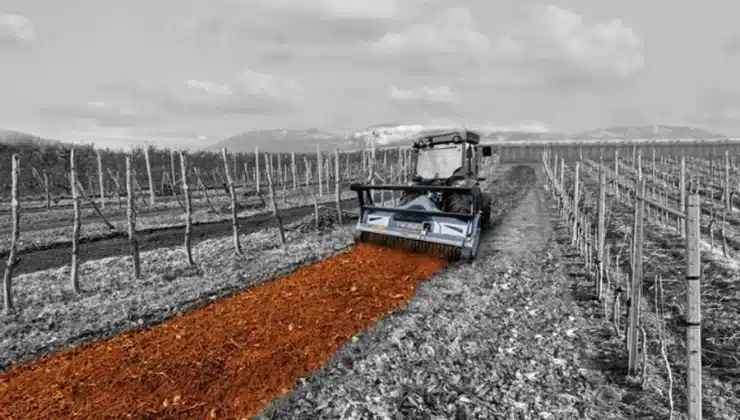
Forestry mulchers have become a strategic asset in modern land management, offering a practical, high-performance solution for vegetation control and terrain preparation. Their versatility and ability to process a wide range of materials – trees, shrubs, roots, and stumps – make them valuable across forestry, agriculture, infrastructure, and environmental sectors.
From improving site access to enhancing safety and productivity, forestry mulchers contribute to efficient and sustainable operations in a variety of working conditions.
Land clearing and vegetation control in forestry operations
In forestry, mulchers are widely used for clearing undergrowth, removing unwanted vegetation, and processing stumps and roots. These machines enable quick intervention across large or inaccessible areas, such as dense woodlands or steep slopes. Their ability to shred material on-site eliminates the need for collection, transport, or burning, reducing both operational costs and environmental impact.
Forestry mulchers are also instrumental in creating firebreaks and managing fire-prone zones, allowing operators to remove flammable biomass and maintain safety corridors. Compared to traditional methods involving manual cutting or bulldozing, mulching offers a cleaner, more controlled result with minimal disturbance to the soil structure.
Applications in agriculture and plantation management
In agricultural contexts, a forestry mulcher supports soil preparation by removing wood debris and eliminating invasive vegetation that may hinder crop productivity. After pruning or harvesting, it can be used to clean rows in orchards and vineyards, promoting a healthier growth environment.
Roadside, utility, and infrastructure maintenance
Maintaining vegetation along roads, highways, railways, and utility corridors is essential for safety and system integrity. Forestry mulchers are regularly employed to clear encroaching brush and maintain clear visibility lines along traffic routes and infrastructure.
They are especially effective in right-of-way (ROW) management for electrical lines, pipelines, and fiber optic networks. In such applications, the ability to mount mulchers on various carriers – tractors, excavators, skid steers, or tracked vehicles – ensures that the right equipment can be deployed based on terrain complexity and available space. This flexibility enables teams to work efficiently even in remote or uneven environments.
Environmental restoration and fire mitigation
Mulchers also play a critical role in post-fire landscape restoration. After a wildfire, they are used to remove damaged vegetation, reduce erosion risks, and prepare the area for reforestation or habitat regeneration. By finely shredding debris, they promote faster decomposition and nutrient cycling.
In fire prevention, forestry mulchers are part of proactive strategies to lower fuel loads and reduce the risk of uncontrolled wildfires. They are used to maintain buffer zones around residential areas, parks, and high-risk corridors, especially in dry, wooded regions. This approach provides an effective alternative to burning or manual clearing, with lower environmental impact and better control.
A strategic tool for modern land management
Forestry mulchers deliver practical advantages in multiple operational contexts. Their combination of precision, adaptability, and cutting performance allows professionals across sectors to manage vegetation more efficiently and safely.
Whether clearing forests, maintaining infrastructure, restoring fire-damaged land, or preparing agricultural fields, forestry mulchers are a key component of modern land management strategies – supporting both productivity and long-term sustainability.
Forestry-grade engineering: FAE’s expertise in mulching technology
Established in 1989, FAE has built a strong reputation for designing and producing high-performance attachments for a variety of carriers, including tractors, skid steers, excavators, tracked units, and specialized vehicles. Its equipment supports operations in multiple sectors, from forest management to agricultural clearing, infrastructure work, and demining.
With a machine lineup exceeding 400 models grouped into more than 90 product lines, the company addresses a wide array of land management and construction needs. Its forestry mulchers are developed to meet the needs of ground preparation, vegetation reduction, and maintenance in ordinary and extreme environments.
These machines are constructed with durability in mind – featuring reinforced frames, high-resistance materials, and precision-engineered components. Capable of processing vegetation up to 20 inches in diameter, including roots, trunks, and dense underbrush, they ensure fine, uniform results in any terrain type.
Compatibility with diverse carriers makes them a reliable choice for a range of applications – from steep slopes to utility easements, fire mitigation zones, and unmanaged woodland.
Thanks to its long-standing technical know-how and focus on continuous improvement, FAE delivers forestry mulchers that combine strength, efficiency, and long-term operational value.