
How Analytics and Tech are Reshaping Baseball Fandom in 2026
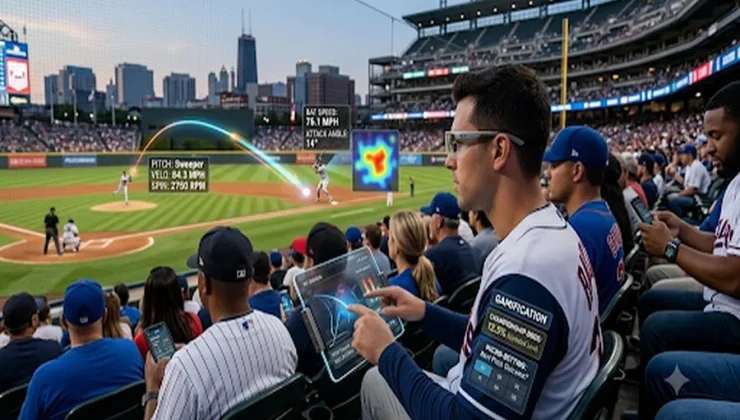
The Hardware Upgrade Nobody Saw Coming
The scout with a radar gun behind home plate is a museum exhibit. Frankly, the entire concept of the “eye test” died years ago. Today’s baseball spectator does not care about subjective grit or outdated metrics like batting average. They care about physics. The 2026 MLB season operates as a massive, ultra-low-latency data pipeline disguised as a pastoral summer game. A teenager in their bedroom now possesses the exact same biomechanical tracking data that front offices used to safeguard like nuclear launch codes.
The reality is that traditional radar tracking hit a massive wall a few seasons back. When MLB first rolled out the original Statcast system, it relied heavily on Doppler radar to guess where a baseball was released based on velocity decay. That early system lost the ball when infielders threw it across the diamond or when batters popped it up too high. The league eventually realized that piecemeal data was useless for a modern audience. They completely tore out the old infrastructure to make way for optical sensor fusion.
Now, we live in the Hawk-Eye era. Every ballpark runs a localized network of twelve high-resolution optical cameras. Five of those specific cameras shoot at a blistering 300 frames per second, hyper-fixated strictly on the bat and the ball. The remaining lenses track fielders, umpires, and 18 individual skeletal points on every player’s body. Players do not wear intrusive sensor suits anymore. Cameras just pull markerless pose-tracking data out of thin air, thirty times a second. Broadcasters slap these skeletal models right onto the replay screen. You can literally watch a shortstop’s kinetic chain break down in real-time.
Seam-Shifted Wake and the Pitch Design Obsession
Look closer and you realize this hardware overhaul forced fans to speak an entirely different language. We used to think a pitch moved based purely on grip and the Magnus effect. A ball spun, and it broke cleanly in the direction of that spin axis. The catch? The optical cameras proved the old theoretical physics models wrong. Pitches were moving in ways that defied their initial rotation.
Enter the era of Seam-Shifted Wake. Pitchers figured out how to orient the seams to catch the air asymmetrically upon release. This creates a delayed aerodynamic wake that shoves the ball sideways mid-flight. The human brain simply cannot calculate that late, unnatural movement. This specific aerodynamic manipulation birthed the “sweeper,” a slider variant engineered for maximum horizontal run instead of traditional vertical drop. Elite starters spammed it to death because it broke the established laws of flight.
Take a guy like DL Hall. A few years back, his four-seam fastball was getting crushed, posting an abysmal 26.9 percent zone rate. The Milwaukee Brewers pitching lab told him to scrap it. They swapped his primary weapon to a sinker that weaponized his natural wrist supination to maximize seam-shifted wake. Fans watched his Called Strike plus Whiff rate jump over 30 percent in real-time. They did not just cheer for the strikeout; they debated the specific aerodynamic drag of his release point on Reddit.
Exposing the Swing: Bat Tracking’s Brutal Math
The cameras did not just expose the pitchers. The last two seasons dragged hitters into the light with comprehensive, league-wide bat tracking. We no longer argue over a beer if a veteran player has a “slow bat.” We pull up the public dashboard and verify his barrel is moving at exactly 71.4 mph at the point of contact.
Analysts and casual fans alike now obsess over swing length. A long, looping swing path means a hitter has a microscopic margin of error against elite velocity. You can see exactly how a batter’s shoulder tilt adjusts to meet the downward trajectory of a breaking ball. Fans even track “Squared-Up Percentage” to see who maximizes bat-to-ball efficiency. You cannot hide a slump behind bad luck anymore; the raw biomechanical data will betray you.
Wall Street in the Bleachers: Algorithmic Sweat
The financial reality of the sport shifted the moment all this biometric data hit the public cloud. Traditional wagers on pre-game moneylines feel incredibly archaic today. Ultra-low latency pipelines from the stadium cameras to Google Cloud birthed the micro-betting monster. Fans sit in the bleachers wagering on the literal next pitch. Is it a strike? Will the exit velocity top 100 mph? Does the batter walk?
This creates an absurd, high-stakes feedback loop. A fan checking their phone might notice a pitcher’s vertical release point drop by two inches in the fifth inning. That is a massive biomechanical red flag for shoulder fatigue. The sportsbooks see it too. Algorithms adjust the live lines instantly. You are no longer just updating your daily fantasy roster or checking the updated championship odds for your favorite club. You are actively trying to beat a Vegas supercomputer using raw kinetic telemetry before the relief pitcher even takes off his jacket in the bullpen.
Predicting the Future from the Couch
Television broadcasts morphed into live math equations just to keep up with the money. Apple TV+ realized a younger audience needed constant analytical stimulation, so they slapped real-time machine learning probabilities directly onto the on-screen scorebug. A batter steps into a 3-2 count, and the graphic immediately updates to show a 22 percent chance of a walk, factoring in the pitcher’s history and the current stadium wind metrics.
Fans are not just consuming these stats passively. Because the league’s data API is completely open, amateur data scientists dump millions of pitch logs into Long Short-Term Memory neural networks. Since an at-bat is basically a high-stakes sequence of dependent events, these homemade models digest count, location, and spin to predict what a catcher will call next.
If a flat screen feels too restrictive, the spatial computing arms race offers an immersive out. MLB’s Gameday3D on Android XR and Apple Vision Pro pulls the raw Hawk-Eye tracking data to render a live, digital replica of the game. You put on a headset and hover right behind the umpire. Tooltips float in the virtual air, showing bat speed and swing path tilt while you watch a 3D rendering of a hitter crushing a mistake curveball.
The Automated Strike Zone and the Aesthetic Crisis
The physical stadium could not hide from the cameras forever. The 2026 season finally unleashed the Automated Ball-Strike challenge system. Human umpires still call the game natively, but players can tap their helmets to challenge borderline pitches. The stadium goes dark for a few seconds. The jumbo screen plays a 3D animation of the ball clipping the strike zone, rendering absolute mathematical justice. The crowd loses its mind, but not at the umpire’s subjective eyesight. They scream at the optical sensors. Catchers who built multi-million dollar careers entirely around pitch framing just watched their unique market value evaporate overnight.
Let’s be real, giving fans and front offices perfect information came with a heavy cost. The math got entirely too good. Front offices mapped every historical spray chart and shifted infielders into the shallow outfield. This turned baseball into an offensively starved ground-out simulator for a few dark years. The league eventually had to step in and physically ban the extreme shift just to preserve a watchable product. The tracking data optimized the defense so perfectly that the governing body had to artificially legislate sub-optimal positioning.
A manager cannot hide behind gut feelings anymore. If a skipper pulls a starter and the bullpen blows the lead, thousands of armchair data scientists will pull the reliever’s expected wOBA and spin rates to publicly roast the decision online. The modern baseball fan is essentially managing a live simulation. They know the pitch sequence, they know the exact biomechanical flaw in the swing, and they have the digital receipts to prove it.