How AI Video Editing is Enhancing Medical Training and Education
Artificial intelligence (AI) is rapidly transforming various sectors, and the healthcare industry is no exception. One of the most significant impacts of AI has been on medical video production and digital health content. Traditionally, creating high-quality videos for medical training required significant time, effort, and resources, making it difficult for institutions to produce and distribute educational materials. Today, AI-powered tools are making the creation of medical videos faster, more accessible, and more efficient. Healthcare professionals, educators, and patients alike benefit from the increased accessibility to complex health topics. With the help of an AI video editor, creating medical content has never been easier, and the quality of these videos is consistently improving.
AI’s role in simplifying video production: Streamlining content creation
Video production, especially in the medical field, often requires a combination of expert knowledge, storytelling, and technical editing skills. AI is transforming this process by automating many of the steps involved in video creation, making it easier and faster for healthcare professionals to produce content.
Accelerated video creation through AI-powered tools
AI tools like automatic video editing and scene recognition are streamlining the production process. AI can analyze raw footage, identify key points, and automatically generate a video that highlights essential information. This accelerates the creation of educational videos, making it possible for medical professionals to focus more on the content rather than the technical aspects of video production. These tools help create concise, informative, and engaging content that can be easily consumed by both students and patients.
Text-command-based video editing for healthcare professionals
One of the more exciting innovations in AI video editing is text-command-based video editing. This technology allows healthcare professionals to create and edit videos by simply entering commands. For example, a medical instructor can type out a description of a procedure or a lecture, and the AI editor can generate a video that matches the text. This simplifies the video creation process and ensures that medical professionals, who may not have technical editing skills, can still produce high-quality educational content.
Enhancing content clarity and accuracy: Precision in medical fnformation
One of the primary goals in medical education is ensuring that content is both accurate and easy to understand. AI tools are enhancing the clarity and precision of medical videos, making them more effective in communicating complex health topics.
1. AI-powered subtitles and voiceovers
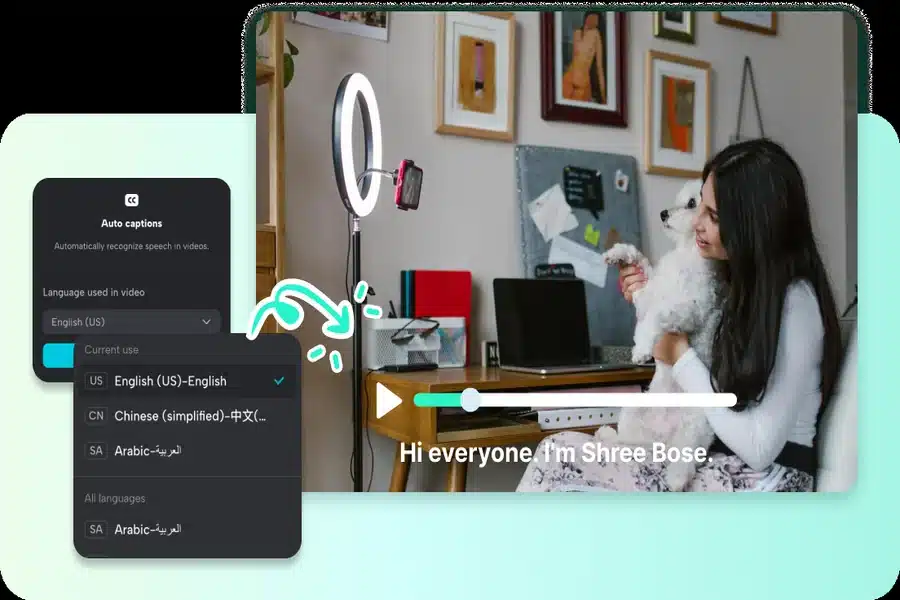
AI-driven subtitle generation ensures videos are accessible to a wider audience, including those with hearing impairments. These subtitles are generated quickly and with high accuracy, crucial for specialized medical terminology. AI can also generate natural-sounding voiceovers, ideal for instructional videos and patient education materials.
2. AI-driven translation capabilities
Making medical content available in multiple languages is essential in a globalized world. AI’s translation capabilities help bridge language gaps. Automated translation tools accurately convert videos, facilitating cross-border healthcare knowledge sharing, especially in remote areas with limited specialized training access.
3. Improved accuracy and clarity of health content
AI processes vast data to make medical videos more precise and informative. AI tools cross-check content against medical databases for up-to-date accuracy. This is vital in medicine, where accuracy is paramount. AI also flags content inconsistencies, preventing the inadvertent sharing of misleading or outdated information.
AI-generated video content: Creating engaging educational resources
The emergence of AI-generated video content is transforming medical education, allowing for the rapid creation of engaging resources from textual data. Complex medical information becomes more digestible through automated video narratives, voiceovers, and animations. This significantly reduces production time, enabling educators to focus on content accuracy. Personalized videos cater to diverse learning styles, enhancing comprehension and retention. Additionally, AI facilitates easy updates, ensuring that resources remain current with evolving medical knowledge. While AI plays a crucial role in content creation, rigorous expert review is necessary to maintain accuracy and ethical standards. Tools like the video trimmer further refine these videos, ensuring conciseness and engagement. AI-generated videos improve knowledge dissemination, making intricate medical concepts accessible to a wider audience and ultimately advancing healthcare education.
Pippit powered by CapCut: Enhancing medical video editing workflows
Pippit powered by CapCut presents a comprehensive suite of tools designed to streamline and enhance medical video production, catering to the unique demands of healthcare education and training. Its intuitive interface and advanced features offer significant advantages for medical professionals seeking to create high-quality, engaging content.
Why Pippit powered by CapCut is the best choice for medical video editing
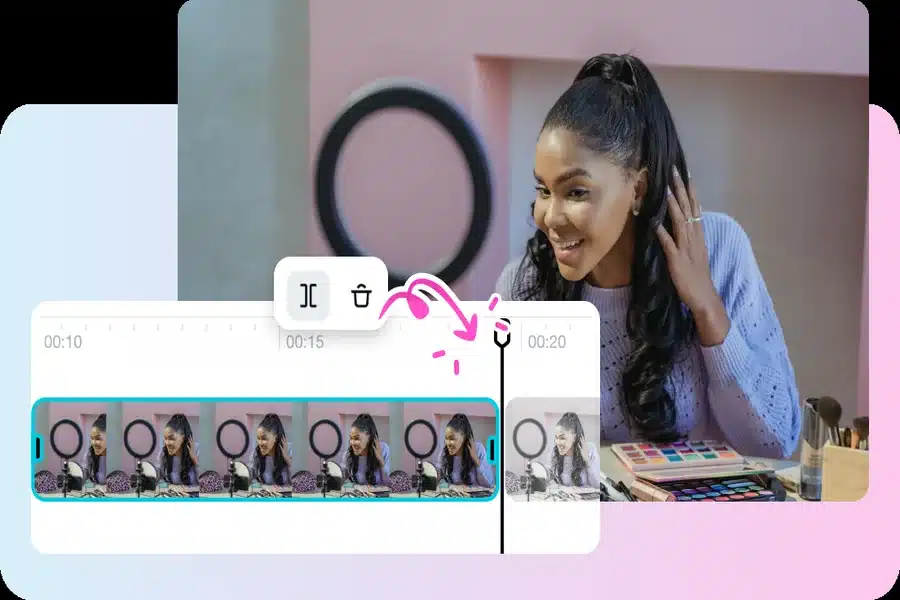
- Precision trimming and editing: Frame-accurate editing enables detailed adjustments, ensuring clarity and accuracy in medical procedures and visualizations.
- AI-powered subtitles and voiceovers: AI tools simplify the process of adding subtitles and voiceovers, making content more accessible to a diverse range of viewers, including those with hearing impairments or language barriers.
- Audio enhancement: Pippit powered by CapCut’s audio tools refine voiceovers and ambient sounds, delivering clear, professional audio that is crucial for effective medical communication.
- Translation capabilities: Create multilingual content, allowing medical education to reach a global audience and diverse communities, breaking down language barriers.
- User-friendly interface: The intuitive design of CCP makes it easy for medical professionals to navigate and edit, enabling them to focus more on content creation and less on technical editing.
Step-by-step guide: Using Pippit powered by CapCut for medical video editing
Step 1: Import and organize your footage
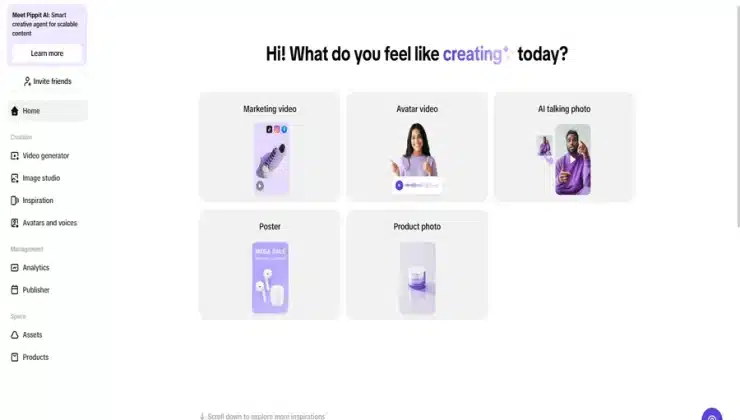
Sign up for Pippit powered by CapCut and log into your dashboard. From the left menu, select “Video generator,” then click on “Video editor.” Click “Click to upload” to import your video or drag and drop your footage directly into the editing interface. Once imported, organize your footage on the timeline by arranging clips and grouping related scenes for easy access during editing.
Step 2: Edit and enhance your video
To enhance your video, begin by using the Text and Captions tools to add informative labels or subtitles, making the content clearer for viewers. Adjust the Audio settings to incorporate background music, voiceovers, or sound effects, ensuring your message is engaging. Utilize the Trim tool to remove unnecessary sections and keep the content concise, ensuring smooth transitions and improved pacing. Finally, fine-tune visual elements like brightness and contrast to create a polished, professional look for your medical training video.
Step 3: Finalize and export
After final edits, click ‘Export’ in the top right. Choose ‘Download’ to save, selecting resolution, format, frame rate, and quality. Click ‘Export’ when satisfied. Or, use ‘Publish’ to share directly to medical platforms, ensuring efficient dissemination of educational content.
Future enhancements and developments
With ongoing AI advancements, medical video production is poised for substantial future innovation. Expect transformative developments in both content creation and educational delivery.
- Improved automation capabilities: Future advancements in AI video editing will lead to even more automation, making the process faster and more efficient. This will allow medical institutions to keep up with the growing demand for content without compromising quality.
- Enhanced visual quality: AI is also expected to improve the visual quality of medical videos, offering higher resolution, better color accuracy, and more lifelike animations. This will enhance the learning experience and ensure that the content is as realistic and clear as possible.
- Personalized content rreation: AI will enable the creation of personalized video content based on the learner’s progress and needs. For example, a medical student may receive customized videos that target their weak areas, making their education more effective and tailored to their specific needs.
- Introduction of interactive features: We can also expect AI to incorporate interactive elements into medical videos, allowing viewers to engage with the content in real-time. These interactive features could include clickable 3D models, quizzes, or decision-making scenarios that improve engagement and learning outcomes.
Conclusion
In conclusion, AI video editing is revolutionizing medical training and education by making content creation faster, more efficient, and accessible. With tools like Pippit powered by CapCut, medical professionals can produce high-quality educational videos with ease, ensuring precision and clarity in every step. AI’s role in enhancing accuracy, generating multilingual content, and streamlining workflows is transforming how healthcare knowledge is shared globally. As AI continues to evolve, the future of medical video production looks even more promising, offering personalized, interactive, and visually enhanced content that will further elevate the learning experience for students and professionals alike.