Future-Proofing Global Supply Chains: A Guide to Resilience, Tech, and Sustainability in 2025
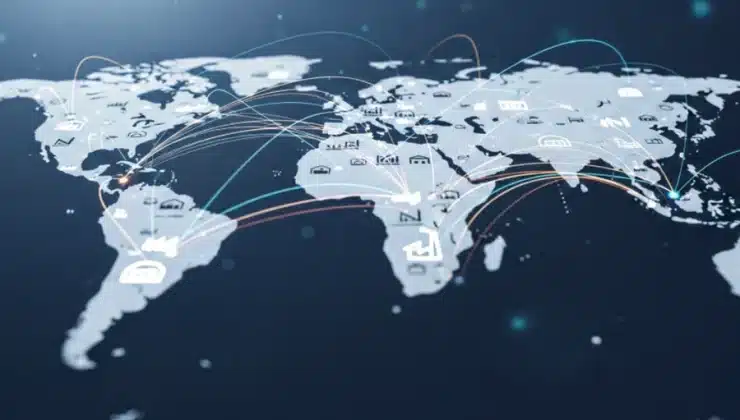
Cost-optimized supply chains no longer exist. Supply chain leaders are navigating uncharted waters, described as VUCA, or Volatility, Uncertainty, Complexity, and Ambiguity. With everything from global politics and climate change to shifting consumer demands, supply chains that have been optimized for cost over the past few decades have been proven to be ill-equipped to deal with the VUCA supply chain world. As we enter 2026, supply chain leaders need to shift their focus to transform their supply chains or face the consequences of not being able to cope with black swan events. The cost-optimized supply chain of the past is no longer capable of keeping up with the demands of 2026 and beyond, requiring an evolution in both strategy and supply chain planning software.
Cost-optimized supply chains no longer exist. Supply chain leaders are navigating uncharted waters, described as VUCA, or Volatility, Uncertainty, Complexity, and Ambiguity. With everything from global politics and climate change to shifting consumer demands, supply chains that have been optimized for cost over the past few decades have been proven to be ill-equipped to deal with the VUCA supply chain world. As we enter 2026, supply chain leaders need to shift their focus to transform their supply chains or face the consequences of not being able to cope with black swan events. The cost-optimized supply chain of the past is no longer capable of keeping up with the demands of 2026 and beyond, requiring an evolution in both strategy and supply chain planning software.
Resilience 2.0: Strategies to build a robust supply chain
Supply chain leaders must transform their supply chain model to become more resilient to the types of VUCA events mentioned above. The Just-in-Time (JIT) philosophy is being replaced by a Just-in-Case (JIC) approach. Here are some strategies to build a resilient supply chain model:
- Diversify: You can no longer rely on a single supplier for critical components. Supply chain leaders need to develop a strategy that follows the “China Plus One” approach, or a similar regional strategy to mitigate the risk of a supply chain disruption in a particular region or country.
- Inventory: Building on the JIC approach, supply chain leaders should hold critical inventory in a location that allows them to react quickly to a supply chain disruption. While this increases the holding costs, this should be considered an insurance policy against a disruption that may shut down an entire production facility.
- Nearshoring and regionalization: With the increased complexities of global supply chains, companies are turning to nearshoring and regionalization to reduce the length of their supply chain. This not only mitigates the risk of a global supply chain disruption but also reduces carbon emissions and makes the supply chain more agile to meet regional customer demands.
Digitization: Industry 4.0 & 5.0 technologies to build visibility into your supply chain
Leaders can no longer use the excuse that they didn’t know what was going on in their supply chain. With the emergence of Industry 4.0 and 5.0 technologies, leaders now have the tools to build the required level of visibility to quickly respond to supply chain disruptions. Here are some Industry 4.0 & 5.0 technologies to consider:
- IoT: Tracking shipments in real-time not only allows you to monitor the location but also monitor other critical data points such as temperature, humidity, etc.
- Digital Twin: Creating a digital twin of your supply chain allows you to model scenarios to understand how your supply chain will react to different types of disruptions.
- AI & ML: These technologies can be used to better forecast demand and predict potential supply chain disruptions.
Quantum Computing: The future of optimization
As we move into 2026, supply chain optimization will no longer be able to be handled by classical computers. Optimization problems in logistics will require the power of quantum computers. Here are a few examples of how quantum computers will be used in logistics optimization:
- Route optimization: With the number of variables involved in route optimization such as traffic, weather, etc. this is an ideal candidate for quantum computing.
- Inventory optimization: Quantum computers will be able to optimize inventory across a global network in real-time to reduce stockouts and overstocking.
Sustainability: Why the circular supply chain is the future?
Sustainability has become a key part of a supply chain leader’s agenda. With regulation and customer demands increasing, companies must take sustainability seriously and build a sustainable supply chain model. Indeed, research from McKinsey & Company indicates that up to 90% of a consumer organization’s environmental impact typically lies within its supply chain, making this transformation an ecological imperative. The circular supply chain model replaces the linear take-make-dispose model. Here are a few ways to make your supply chain more sustainable:
- Design for circularity: Work with your R&D teams to design products that are easier to recycle.
- Green logistics: Optimizing loads on trucks and switching to alternative energy sources are just a couple of ways to make logistics more sustainable.
- Traceability: Using blockchain technology allows you to track your products from raw material to delivery. This not only helps to ensure sustainable practices throughout the supply chain but also allows traceability in case of a quality issue.
Conclusion
In this blog, we have looked at the future of supply chain management and how leaders need to transform their supply chain model to meet the increasing demands of a VUCA supply chain world. With the emergence of new technologies and techniques, supply chain leaders have the tools at their disposal to build a robust, agile, and sustainable supply chain model. To achieve this, they will need to deploy a next-generation supply chain planning platform like o9 Solutions. The o9 platform allows leaders to build an integrated business planning process that connects the organization and allows leaders to make decisions based on a single version of the truth. With advanced analytics and machine learning capabilities, the o9 platform also allows leaders to build what-if scenarios and predict the outcomes of their decisions.