
Aging High-Rise Facades: What Actually Drives Envelope Restoration Cost in Honolulu
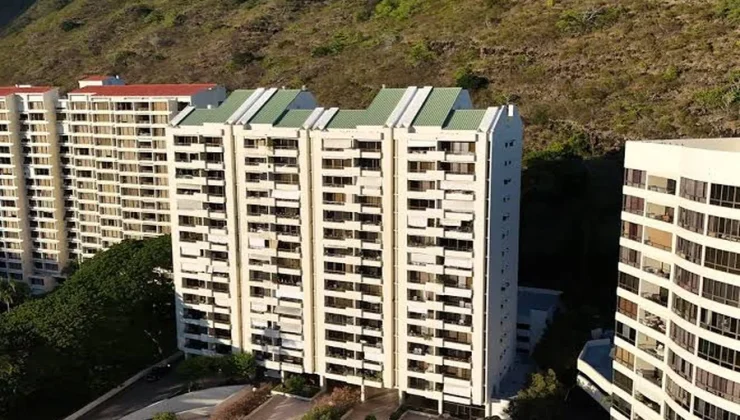
Two towers, same age, same view, bids that land $900,000 apart. I have watched that gap open up more than once on Oahu, and it almost never comes down to the contractor being greedy or generous. It comes down to a handful of variables that owners and property managers can actually see coming if they know where to look.
Here is the promise: by the end of this piece you will know which cost drivers are fixed by physics and location, which ones you control, and how to sequence an envelope program so interior water damage never becomes the line item that wrecks your reserve study.
Honolulu is a genuinely punishing place to own a building. Salt air eats metal, UV hammers sealant and coatings, and the trade wind rain finds every failed joint. None of that is a reason to panic. It is a reason to plan in cycles instead of reacting to leaks.
Why island buildings age faster than mainland ones
Concrete does not care about your budget. It cares about chloride exposure, thermal cycling, and how long water sits against steel. On the leeward side of Oahu, sun exposure is brutal and drying is fast. On the windward side, you get moisture that stays put for days. Both environments attack the same envelope components, just on different clocks.
Rebar corrosion is the expensive one. Once chlorides migrate through cracked concrete and reach the steel, the rebar expands, spalls the cover, and you graduate from a sealant job to structural concrete repair. The National Oceanic and Atmospheric Administration has documented how coastal environments accelerate corrosion of infrastructure, which is worth a read if you want the science behind your repair budget. I would rather spend money on a moisture survey now than on a structural repair in five years. That is not a close call.
Wait, so what does envelope restoration actually cover?
Most people hear “restoration” and picture a paint job. It is a lot wider than that. On a Hawaii high-rise, the envelope includes concrete surfaces and their embedded reinforcement, waterproofing membranes and deck coatings, sealant joints at every transition, windows and doors, railings and guardrails, and the drain-waste-vent piping that punches through the shell. Miss one and the rest of the system drains into your lobby ceiling.
That is why the smartest owners treat this as one program instead of five vendors working five schedules. A high-rise building envelope restoration scope that coordinates sealant replacement with concrete repair and railing replacement closes the water path in a single mobilization, which is where the real savings live. I have seen buildings burn that advantage by splitting work across two fiscal years and paying twice for scaffolding.
The five cost drivers that actually move the number
Strip away the sales language and your bid is built from these:
- Access. Swing stage, boom lift, or full scaffolding. Height, roof geometry, and whether you can hang stages off the parapet decide this.
- Scope depth. Sealant only, or sealant plus spall repair plus membrane replacement. Depth compounds fast.
- Occupancy logistics. An empty building is cheap. A building with 200 residents, cars, and a pool deck is not.
- Surface preparation. Coating bond depends entirely on how well the substrate gets cleaned, and Hawaii’s humidity dictates cure windows.
- Materials. Marine-grade sealants, corrosion-resistant rails, and high-build coatings cost more upfront and last longer here.
Access and occupancy are the two owners underestimate. Everything else is fairly predictable once you have a condition assessment in hand.
A short checklist for planning your program
Run this in order. It is how I would sequence it if the building were mine.
- Commission a condition assessment that maps every deficiency by elevation and component, not a general summary.
- Get a moisture survey on the concrete before anyone prices repair quantities.
- Separate must-fix safety items from deferrable cosmetic ones, then price them separately in the same bid.
- Ask each bidder to show their resident notification plan and daily cleanup routine in writing.
- Confirm fall protection and site safety procedures match federal standards. The Occupational Safety and Health Administration publishes the scaffold and fall protection rules your contractor should be able to cite without looking them up.
- Build the work into your reserve study as a recurring cycle, not a one-time emergency.
That last item matters more than people admit. Envelope work on a coastal high-rise is not a once-in-a-lifetime event. It is a rhythm.
What occupied-building work really costs you in patience
Here is the part I find genuinely underrated. On an occupied tower, the disruption premium is real, and it shows up in ways that do not appear on a bid sheet. Residents move cars for stage drops. A pool deck closes for three weeks. Someone’s lanai gets plastic sheeting taped over it, and someone else calls the board about it.
A contractor who has done this a hundred times builds that choreography into the schedule. A contractor who has not will discover it mid-project and ask you for time extensions. When I compare bids, I read the logistics section before the price section. If the schedule does not mention resident communication, staging areas, and daily debris removal, the number is fiction.
Owners also tend to forget how much of the labor market this depends on. Skilled trades in construction remain a large and steadily employed segment of the American workforce, based on data from the Bureau of Labor Statistics, and in an island market, that labor pool is thin and books up months out. Book early or pay a premium for urgency.
What a smart owner does with all this
You do not need to become a building science expert. You need to ask better questions and stop treating facade work as an emergency purchase.
Get the assessment done while the building is dry. Publish your own shorthand for how a sealant joint should look and how long it should last, so your board or ownership group can measure quality instead of guessing. Fund the work in cycles. Keep a photo log of every elevation after each phase, because in five years that log is your baseline. And when bids come in, compare scope line by line before you compare totals.
Owners who do these four things consistently spend less over a twenty-year window than owners who chase leaks one at a time. I have watched both types, and the pattern holds.
So here is the question worth putting to your board this quarter: if you commissioned a full condition assessment tomorrow and mapped every deficiency by elevation and component, would your reserve study survive the answer? If you are not sure, that uncertainty is the most expensive item on the building.