
DC-DC Converters in IoT Devices: Power Efficiency Matters
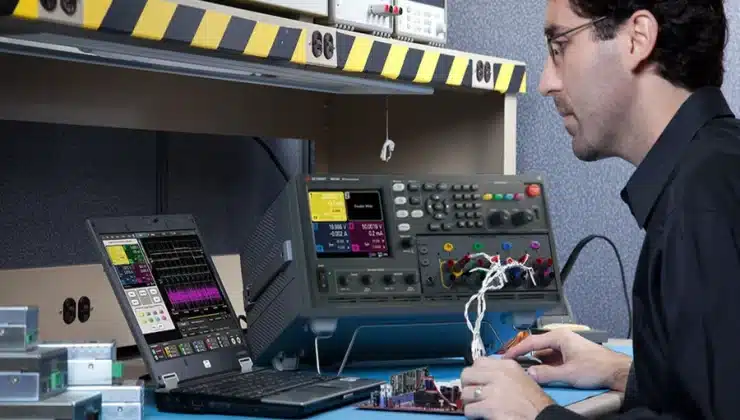
The Internet of Things (IoT) has rapidly evolved into a cornerstone of modern technology. From smart homes and wearables to industrial sensors and environmental monitoring, billions of devices are now connected and communicating. But behind every smart device lies a crucial challenge: powering these tiny yet capable machines efficiently and reliably. Here, DC-DC converters play a pivotal role. In IoT devices, where power efficiency directly impacts usability, reliability, and cost, choosing the right converter can make or break a design.
Why Power Efficiency Is Critical in IoT Devices
Most IoT devices are battery-powered or energy-harvesting, designed to operate for months or even years without maintenance. Power efficiency translates directly into longer battery life, lower replacement frequency, and improved user experience. For industrial or remote deployments, it also means reduced operational costs and minimal environmental impact.
Efficiency is not just about extending battery life — it’s about thermal management as well. Poor efficiency generates excess heat, which is problematic for miniaturized electronics, potentially degrading sensors, microcontrollers, or RF modules. For IoT devices deployed in tight enclosures or outdoors, maintaining low operating temperatures is critical to reliability.
In a nutshell, every milliwatt saved improves the sustainability, cost-effectiveness, and dependability of IoT networks.
How DC-DC Converters Enable Efficient Power Use
DC-DC converters are electronic circuits that take an input DC voltage and convert it to a different DC voltage level, either stepping it up (boost), stepping it down (buck), or both (buck-boost). Compared to traditional linear voltage regulators, which dissipate excess energy as heat, switching DC-DC converters achieve much higher efficiencies — often exceeding 90% in well-designed systems.
For battery-powered IoT devices, this efficiency is critical. Many components in a device may require different voltage rails. A Li-ion battery provides around 3.7V, but the microcontroller may need 1.8V while a radio module needs 3.3V. Using efficient converters to derive these rails minimizes wasted energy.
Moreover, modern converters offer features like low quiescent current, enabling efficient operation even at light loads or standby, which is common in IoT devices that wake up intermittently to transmit data.
Common Topologies in IoT Applications
Buck (Step-Down): Used when the battery voltage is higher than the load voltage, e.g., stepping down from 3.7V to 1.8V.
Boost (Step-Up): Used when the battery voltage drops below the required load voltage, e.g., stepping up from 2V to 3.3V.
Buck-Boost: Ideal for systems where the battery voltage can fluctuate above and below the load voltage.
Each topology has its own trade-offs in terms of complexity, cost, and efficiency, which designers must consider.
Key Considerations When Choosing a DC-DC Converter for IoT
Selecting a DC-DC converter for an IoT device is not a checkbox exercise — it’s a balancing act among conflicting priorities. Designers must make nuanced decisions based on the device’s operational profile, deployment environment, and system-level goals. Here are the critical — and often underestimated — factors to evaluate:
Efficiency Profile Across Operating Modes
Many datasheets tout “peak efficiency,” but IoT devices rarely operate at peak load. In practice, these devices spend most of their time in deep sleep, punctuated by short, high-current transmit or sensing bursts. Therefore, it’s essential to scrutinize the efficiency curve across light-load, mid-load, and peak-load regions. Look for converters with pulse-frequency modulation (PFM) or hybrid PFM/PWM modes that maintain high efficiency even at microamp standby currents without incurring excessive ripple.
Dynamic Response and Stability Margins
IoT devices with wireless transceivers (e.g., BLE, LoRa, NB-IoT) exhibit steep current ramps — jumping from microamps to hundreds of milliamps within microseconds. The converter must exhibit both fast transient response and stability under varying output capacitors. Engineers should check load step response plots and verify phase margin with the actual ESR and capacitance of the intended output network. Inadequate compensation can lead to overshoot, undershoot, or even oscillation, compromising RF performance and reliability.
Input Voltage Tolerance and UVLO Behavior
Battery-powered devices inevitably experience voltage sag as the battery discharges. Choosing a converter with a wide input range and properly configured undervoltage lockout (UVLO) ensures graceful degradation rather than abrupt shutdown. For energy-harvesting designs, pay attention to converters capable of cold start at very low input voltages.
Output Noise and PSRR
The noise and ripple on the output rail directly couple into sensitive analog or RF circuitry. Designers often overlook the importance of power supply rejection ratio (PSRR) in converters — particularly at frequencies critical to your RF band. Evaluate not just the nominal ripple, but also how the converter behaves in spread-spectrum or PFM mode, as these can introduce spurious tones. Layout and filtering strategy must also align with converter choice.
Thermal Derating and Ambient Constraints
Even with high-efficiency converters, power loss manifests as heat, which can accumulate in sealed enclosures. Derating curves in datasheets reflect how switching frequency, ambient temperature, and airflow affect maximum output current. For outdoor or fanless IoT nodes, designers should select converters conservatively, keeping junction temperatures within safe margins and verifying thermal performance in situ.
Control Topology and EMI Performance
Switching converters are inherently noisy. In environments where EMI compliance (e.g., CISPR-22, FCC Part 15) is mandatory, pay attention to converters with spread-spectrum modulation, slower edge rates, or soft switching. Buck converters may radiate less than boost topologies, but layout and shield design are equally important. Designers should plan early for conducted and radiated emissions tests to avoid costly last-minute redesigns.
System-Level Considerations
In multi-rail designs, sequencing and fault protection matter. Look for converters that support programmable soft-start, enable/disable control, and fault flags. Protection features like short-circuit protection, over-temperature shutdown, and latch-off vs. hiccup modes determine how gracefully your device recovers from faults — critical in remote deployments.
Real-World Examples of DC-DC Converters in IoT
To illustrate the impact, let’s examine a few common use cases:
Wearable Devices: Fitness trackers and smartwatches rely on converters with ultra-low standby current and excellent light-load efficiency to stretch tiny batteries over days or weeks.
Environmental Sensors: Deployed in remote areas, these nodes may harvest energy from solar panels or rely on small batteries, making high-efficiency converters indispensable.
Smart Home Devices: Wireless thermostats, door sensors, and cameras often operate from coin cells or AA batteries, requiring converters that minimize power draw while supporting peak transmit currents.
In all these scenarios, choosing a suboptimal converter can cut battery life by 30–50%, necessitating more frequent replacements and frustrating users.
Conclusion
In the IoT world, power efficiency is not just desirable — it’s essential. Every joule counts when you’re deploying thousands or millions of devices in the field. DC-DC converters sit at the heart of this challenge, enabling designers to balance performance, size, and battery life. By carefully selecting the right converter, considering factors like light-load efficiency, footprint, noise, and transient response, engineers can create IoT devices that delight users and endure in the real world.