Keeping Warehouses Moving: Maintenance Tips for Commercial Equipment
In a warehouse, downtime has a sound. It is the silence of a conveyor that has stopped, the beeping of a forklift that will not start, the impatient idling of a truck waiting at a dock that cannot be loaded. Every minute of that silence costs money, and in a busy distribution centre, those minutes add up quickly.
Most breakdowns are not bad luck. They are the predictable result of equipment that has been worked hard and maintained too little. A structured maintenance program covering forklifts, dock levellers, roller doors, conveyors and vertical transport, including scheduled goods lift maintenance in Melbourne warehouses and multi-level facilities, keeps operations running and protects workers from avoidable hazards.
Reactive maintenance is the expensive option
Many businesses fall into a pattern of fixing things only when they break. On paper, it looks cheaper because you only spend money when something fails. In practice, it tends to cost far more.
Emergency repairs often attract call-out fees and premium rates. Parts may need to be rushed in. Production stops while you wait. And a small fault left unattended can damage other components, turning a minor repair into a major one. There are safety costs too, since equipment that fails unexpectedly can injure people.
Shift to planned maintenance
Planned or preventive maintenance means servicing equipment at regular intervals based on time, usage or manufacturer recommendations. Oil changes, inspections, lubrication, adjustments and replacement of wear parts happen before they cause a problem.
A good starting point is a register of every piece of equipment in the facility, with its maintenance schedule, service history and responsible contractor. This becomes the backbone of your maintenance program and makes it easy to see what is due and what is overdue.
Forklifts and mobile plant
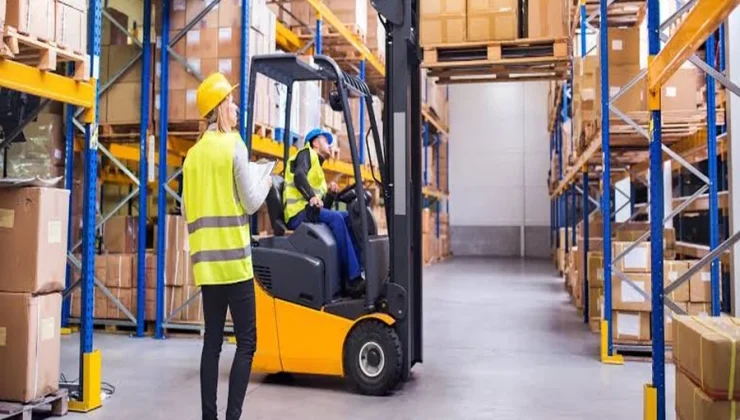
Forklifts are the workhorses of most warehouses, and they take a beating. Daily pre-start checks by operators should cover tyres, forks, chains, hydraulics, brakes, steering, lights, horns and warning devices. Any defects should be reported and the machine taken out of service if it is unsafe.
Regular servicing by qualified technicians, according to hours of use, keeps engines, batteries and hydraulic systems in good condition. For electric forklifts, battery care, including correct charging and watering, has a big impact on performance and lifespan.
Dock equipment and doors
Dock levellers, roller doors and high-speed doors are opened and closed constantly, and they often take knocks from trucks and forklifts. Inspect them regularly for damage, wear on seals and springs, and proper operation of safety features.
A damaged dock leveller can create a serious trip or fall hazard, while a faulty door can affect security, temperature control and pest management. Keeping these items in good repair protects both people and stock.
Conveyors and automation
Automated systems can dramatically increase throughput, but they also introduce more components that can fail. Belts, rollers, motors, sensors and control systems all need attention.
Keep conveyors clean, check belt tension and alignment, and listen for unusual noises that might indicate bearing wear. For more sophisticated systems, monitoring software can track performance and flag issues before they cause stoppages.
Lifts and vertical transport
Multi-level warehouses, mezzanine storage and manufacturing facilities often rely on goods lifts to move stock between floors. These lifts carry heavy loads repeatedly and are subject to regulatory requirements around inspection and maintenance.
Regular servicing by licensed technicians helps ensure doors, brakes, controls and safety systems operate correctly. Ignoring lift maintenance can lead to breakdowns that bring vertical movement to a halt, along with significant safety risks.
Train people to notice problems
Your staff are the first line of defence against equipment failure. Operators who understand how their machines should look, sound and feel are far more likely to notice early warning signs.
Encourage a culture where reporting faults is expected and welcomed, not seen as complaining. A simple, quick reporting process, whether paper-based or through an app, makes it easier for people to speak up.
Keep records and review them
Maintenance records are useful for more than compliance. Reviewing them can reveal patterns, such as a particular machine that breaks down frequently or a component that wears out faster than expected. These insights help you decide when to repair, when to upgrade and when to replace equipment entirely.
A small investment with big returns
Maintenance is rarely glamorous, and it can feel like an easy area to trim when budgets are tight. But a well-maintained warehouse runs more smoothly, more safely and more profitably. The cost of a planned service is almost always lower than the cost of an unplanned stop.