
Ford 6.7 Powerstroke vs Ram 6.7 Cummins 2026: Which Diesel for Weekly 14K Towing
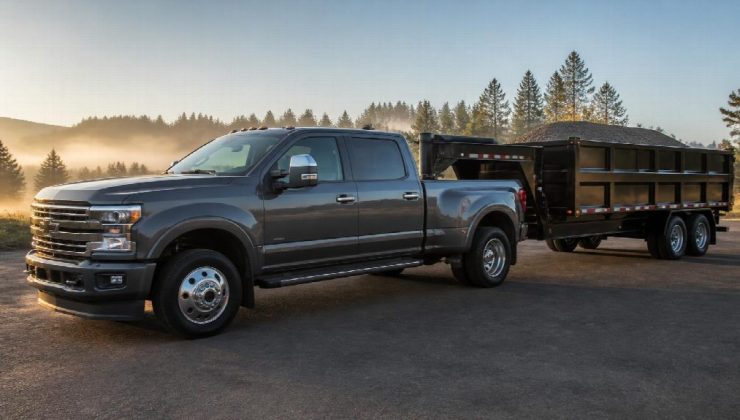
Towing a 14,000-pound dump trailer once a week while daily-driving empty the other six days puts you right between the Ford 6.7 Powerstroke and the Ram 6.7 Cummins. The 2025 and 2026 model years bring meaningful updates to both. Choosing between a Lariat F-250 and a Laramie Ram 2500 comes down to how each truck handles the load, the empty commute, and the maintenance schedule.
Why a Diesel Makes Sense for 14,000 Pounds
A 14K trailer sits in the sweet spot for a modern 6.7L diesel. Yes, the Ford 7.3 Godzilla gas V8 and the Ram 6.4 Hemi can technically pull that weight. They work harder doing it. Brakes, transmission fluid, and rear differential components wear faster under constant heavy towing.
Fuel economy under load favors the diesel by a wide margin. Resale value does too. In the 3/4-ton and 1-ton segments, diesel trucks command a stronger used market. If your annual tow mileage tops 3,000 to 4,000 miles, the diesel premium tends to pay itself back.
What the Ford 6.7 Powerstroke Gets Right
The 2025 and 2026 6.7L Powerstroke in the F-250 Lariat produces up to 500 horsepower and 1,200 lb-ft of torque in High Output form. The 10-speed TorqShift transmission shifts smoothly under load. Exhaust braking is aggressive and well-calibrated. The integrated trailer brake controller remains the best in the segment.
At 6:30 on a Friday morning, rolling onto the highway with a loaded dump trailer, the Powerstroke settles in. The engine stays quiet. The transmission does not hunt. It feels planted.
The downside is packaging. Two fuel filters, one frame-mounted and one engine-mounted, make service more involved. Oil capacity is 13 quarts. The engine bay is tight, and routine jobs take longer than they do on the Cummins. Late-model 6.7 Powerstrokes have also shown CP4 injection pump sensitivity to contaminated fuel and occasional turbo actuator issues in the 100K to 150K mile range.
What the Ram 6.7 Cummins Gets Right
The 6.7L Cummins in the 2025 Ram 2500 Laramie makes up to 430 horsepower and 1,075 lb-ft of torque in the HO configuration. The inline-six layout means fewer moving parts, straightforward wrenching access, and a reputation for running past 400,000 miles with basic care.
Maintenance costs less. A single fuel filter housing, easier oil filter access, and simpler valve cover service all add up over time. The bottom end is essentially bulletproof.
The tradeoff is daily comfort. The Cummins carries a heavier front axle load. Unloaded, the ride feels stiffer than the Ford, and you notice it on rough pavement. Air suspension on the Laramie trim helps, but the empty-day experience is not as refined. Common issues include EGR cooler failures and occasional turbo actuator trouble.
How Maintenance Costs Compare
Both trucks need regular filter changes, fluid swaps, and belt inspections. The difference shows up in parts count and labor time.
The Powerstroke uses more oil per change and a more complex filter layout. The Cummins keeps things simpler. Regardless of brand, keeping a spare diesel fuel filter on the shelf saves time when the service interval lands in the middle of a busy week. A clogged filter can cut power under load, and waiting for a dealership appointment with a trailer due on Monday morning is not a great position to be in.
Oil filter and air filter changes round out the routine service items. Both engines respond well to staying on schedule. Neither forgives neglected fuel filtration.
Why the 7.3 Godzilla Gas Is Not the Escape Hatch
Some buyers look at Ford's 7.3L gas V8 as a way to skip the diesel premium. The engine is stout, but recent model years have shown roller lifter failures and camshaft wipe events, sometimes as early as 60K to 90K miles. Symptoms include ticking at idle, oil pressure swings, and eventually a wiped cam lobe that needs a full top-end rebuild.
Ford updated the oil pressure sensor programming and revised the high-idle calibration. The underlying valvetrain concerns still worry buyers who tow heavy every week. For 14K trailer duty, the gas 7.3 pushes the drivetrain harder and hotter than either diesel. Lifter and transmission wear timelines move forward.
Which Truck Fits Your Week
Both diesels are excellent. They lean in different directions.
- Pick the Ford 6.7 Powerstroke Lariat if smooth ride quality, best-in-class interior tech, and refined towing manners matter most. The unloaded commute feels more comfortable, and the trailer control integration is hard to beat.
- Pick the Ram 6.7 Cummins Laramie if low long-term ownership cost, straightforward DIY maintenance, and an inline-six that runs past 400K miles are the priorities. The tradeoff is a stiffer empty ride, though air suspension narrows the gap.
Either way, skip the gas 7.3 for weekly heavy towing. The diesel premium is money well spent. The Ford 6.7 Powerstroke vs. Ram 6.7 Cummins 2026 debate comes down to whether you value the empty-day experience or the maintenance calendar more.