How Chemical Etching Is Used in the Automotive Industry

The automotive industry demands high precision, consistency, and cost efficiency across every component. Chemical etching has become a key manufacturing process that meets these requirements, especially for thin metal parts and complex geometries. Unlike traditional machining or stamping, chemical etching removes material without mechanical force, which helps maintain structural integrity and dimensional accuracy.
Automotive manufacturers use chemical etching to produce lightweight, intricate, and high-performance components at scale. As vehicles shift toward electrification and smart systems, the need for precise metal parts continues to grow.
Why Chemical Etching Fits Automotive Manufacturing
Precision Without Mechanical Stress
Chemical etching uses controlled chemical reactions instead of cutting tools. This avoids deformation, which is critical for components that require tight tolerances.
Cost Efficiency at Scale
- No expensive hard tooling
- Lower setup costs for design changes
- Efficient for both prototyping and mass production
Support for Complex Designs
Modern vehicles rely on increasingly complex systems. Chemical etching produces:
- Fine patterns
- Micro holes
- Thin metal components
This level of detail is difficult to achieve with traditional processes.
Key Automotive Applications of Chemical Etching
Fuel System Components
Precision for Performance
Fuel injectors and filters require consistent flow control. Even minor variations affect engine efficiency.
Applications include:
- Fuel injector discs
- Filtration meshes
- Valve components
Chemical etching produces uniform отверстия and smooth edges, which improves flow accuracy and reliability.
Battery and EV Components
Supporting Electrification
Electric vehicles rely on advanced battery systems that require precise metal parts.
Common uses:
- Battery connectors
- Busbars
- Cooling plates
Chemical etching supports thin, conductive materials such as copper and aluminum. This helps improve energy efficiency and thermal management.
Sensors and Safety Systems
High Accuracy Requirements
Modern vehicles depend on sensors for safety and automation.
Applications include:
- Airbag sensors
- Pressure sensors
- ABS system components
Chemical etching ensures consistent dimensions, which improves sensor accuracy and system reliability.
Protecting Electronic Systems
Vehicles contain complex electronic systems that must operate without interference.
Common components:
- Shielding covers
- Grounding elements
- Signal protection parts
Chemical etching produces precise shielding geometries that maintain signal integrity.
Decorative and Functional Interior Parts
Combining Design and Function
Automotive interiors require components that look good and perform well.
Examples:
- Speaker grilles
- Dashboard trims
- Control panel overlays
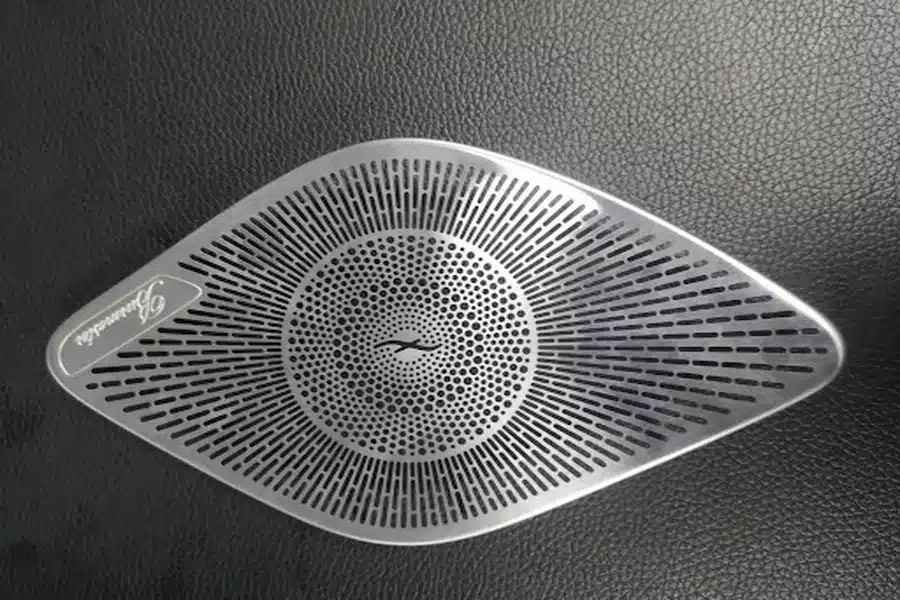
Chemical etching allows intricate patterns and clean finishes without additional processing.
Advantages Over Traditional Methods
Compared to Stamping
- No tooling wear
- Faster design updates
- No mechanical deformation
Compared to CNC Machining
- Better for thin metals
- Lower cost for flat parts
- Higher efficiency for complex patterns
Compared to Laser Cutting
- No heat-affected zones
- Smoother edges
- Improved consistency
These advantages help automotive manufacturers reduce defects and improve production efficiency.
Material Flexibility in Automotive Applications
Common Materials Used
- Stainless steel for durability and corrosion resistance
- Copper for electrical conductivity
- Aluminum for lightweight structures
Why Material Choice Matters
Each material affects:
- Etching speed
- Final precision
- Component performance
You need to align material properties with application requirements to achieve optimal results.
Role in Lightweight and Sustainable Design
Reducing Vehicle Weight
Lightweight components improve fuel efficiency and extend EV range.
Chemical etching supports thin materials without compromising strength.
Minimizing Waste
- Uses less raw material
- Reduces scrap compared to machining
- Supports efficient production processes
This aligns with sustainability goals in the automotive industry.
TMNetch Custom Speaker Grills
Precision Design for Automotive Interiors
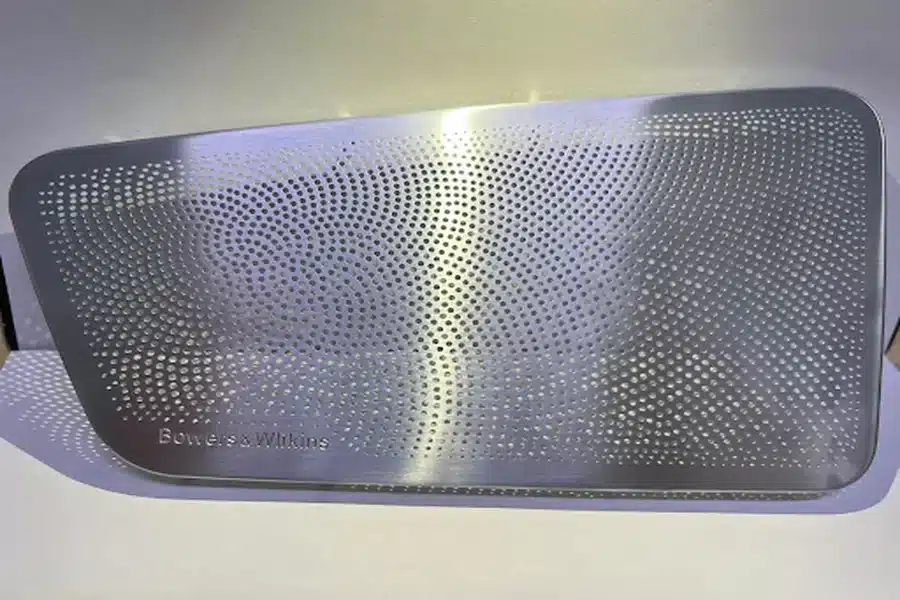
TMNetch specializes in custom speaker grills designed for automotive applications. These components combine acoustic performance with visual design, which makes them essential for modern vehicle interiors.
Why Choose TMNetch for Speaker Grills
- High precision etching
Ensures uniform hole patterns for consistent sound quality - Custom design support
Helps you create unique patterns that match brand identity - Material flexibility
Supports stainless steel, aluminum, and other metals - Scalable production
Suitable for both prototype and mass production
Performance Benefits
- Optimized sound transmission through precise отверстия patterns
- Clean edges with no burrs
- Durable materials that resist wear and corrosion
Application Scenarios
- Car door speaker covers
- Dashboard audio systems
- Premium interior upgrades
TMNetch focuses on delivering both functionality and aesthetics, which helps automotive brands enhance user experience.
Conclusion
Chemical etching plays a critical role in the automotive industry by enabling high-precision, cost-effective production of complex metal components. From fuel systems to EV batteries and interior parts, this process supports modern vehicle design and performance requirements.
As automotive technology evolves, the demand for lightweight, precise, and reliable components will continue to grow. Chemical etching provides a scalable solution that meets these demands while improving efficiency and product quality.
Partnering with a specialized provider such as TMNetch ensures you achieve consistent results, whether you are developing functional components or high-end interior features like custom speaker grills.