
Are Lightweight E-Bikes Less Powerful, or Just More Efficient?
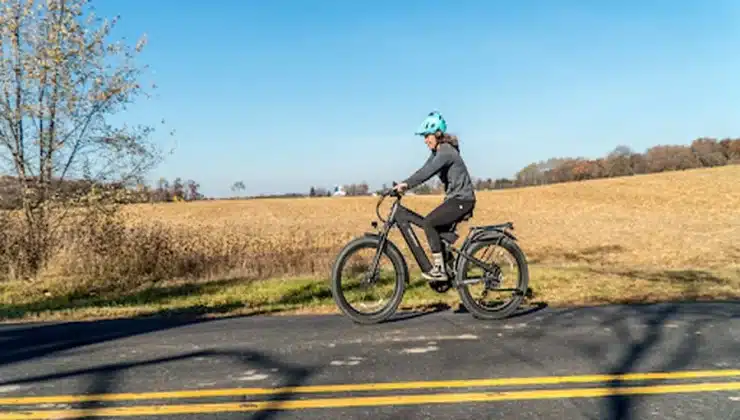
Lightweight e-bikes often raise the same question: if a bike is lighter, does that mean it’s less powerful? On paper, heavier e-bikes frequently advertise bigger motors, higher torque numbers, and larger batteries. Lightweight models, by contrast, tend to look more modest in their specs.
But power on an e-bike isn’t just about peak output. It’s about how effectively that power is used. To understand whether lightweight e-bikes are truly less powerful—or simply more efficient—we need to look beyond numbers and focus on real-world riding.
Why Lightweight E-Bikes Are Often Perceived as Less Powerful
The idea that lightweight e-bikes lack power usually comes from spec comparisons.
Heavier e-bikes often feature:
- Higher peak wattage motors
- Larger batteries with higher Wh ratings
- Torque figures designed to impress
Lightweight e-bikes, on the other hand, are usually designed with restraint. Their motors are tuned for smooth delivery rather than maximum output, and their batteries are sized for practicality rather than extremes.
On a spec sheet, this can make them appear underpowered—even when that’s not how they feel on the road.
Power vs Efficiency: Two Different Design Goals
Power answers the question: How much output can the system produce at its peak?
Efficiency answers a different one: How effectively does the system turn energy into forward motion?
Lightweight e-bikes focus on efficiency. Lower overall mass means:
- Less energy required to accelerate
- Less power needed to maintain speed
- Reduced load on the motor during normal riding
As a result, a lightweight e-bike can feel responsive and capable even with lower peak numbers.
How Weight Changes the Riding Experience
Weight plays a major role in how power is perceived.
On a heavier e-bike, more of the motor’s output is spent overcoming inertia. This often leads to the need for:
- Larger motors
- Higher torque figures
- Bigger batteries to sustain output
On a lighter e-bike, less power is wasted moving mass. Acceleration feels quicker, assistance feels more immediate, and the bike responds more naturally to pedaling input.
In everyday riding, this often translates to a bike that feels “lively” rather than brute-force powerful.
Do Lightweight E-Bikes Actually Climb Hills Well?
Hill climbing is where many riders expect lightweight e-bikes to struggle. In reality, the opposite is often true—within reasonable limits.
Because lightweight e-bikes carry less mass uphill, they require less torque to achieve the same result. A moderately powered motor paired with low weight can climb efficiently without feeling strained.
Heavier e-bikes may still win on extremely steep climbs or under heavy load, but for typical urban and recreational hills, lightweight models are more than capable.
Real-World Power Is About Control, Not Just Output
Power that’s difficult to control doesn’t always feel powerful.
Lightweight e-bikes often deliver assistance more smoothly and predictably. This makes starts, stops, and low-speed riding feel confident and natural—especially in city environments.
In contrast, high-output systems on heavy bikes can feel abrupt or overwhelming at lower speeds, even if they offer impressive peak power.
For many riders, usable power matters more than maximum power.
Battery Size, Range, and Perceived Power
Lightweight e-bikes typically use smaller batteries, which raises concerns about range and sustained power.
However, efficiency offsets this in many cases. A lighter system:
- Draws less energy per mile
- Operates in a more efficient motor range
- Experiences less thermal stress
This means real-world range often matches—or comes surprisingly close to—that of heavier bikes with larger batteries, especially in stop-and-go riding.
When Lightweight E-Bikes Can Feel Less Powerful
There are situations where lightweight e-bikes genuinely offer less power.
These include:
- Carrying heavy cargo
- Riding with a second passenger
- Extremely steep or prolonged climbs
- High-speed riding under constant load
In these scenarios, heavier bikes with larger motors and batteries are better suited to the task.
Lightweight e-bikes are not designed to replace high-capacity platforms—they are designed to avoid unnecessary excess.
Who Benefits Most From a Lightweight, Efficient System?
Lightweight e-bikes are especially well-suited for:
- Urban commuters
- Riders who value natural pedal feel
- Seniors and returning cyclists
- Apartment and indoor storage users
These riders benefit more from responsiveness, manageability, and efficiency than from maximum output.
So, Are Lightweight E-Bikes Less Powerful, or Just More Efficient?
They are usually more efficient, not inherently less capable.
Lightweight e-bikes trade peak output for smarter power use. Instead of overpowering weight, they reduce the need for power in the first place. For everyday riding, this often results in a more enjoyable, intuitive experience.
Power still matters—but how that power is applied matters more.
Conclusion
Lightweight e-bikes aren’t about doing everything at maximum capacity. They’re about matching power to purpose.
For riders who don’t need extreme torque or heavy-load capability, a lightweight, efficient system can feel just as strong—sometimes stronger—than a heavier, high-output alternative.
In real-world riding, efficiency often beats excess.