
Lower Costs, Higher Output: The Smart Business Case for Cobot Welding
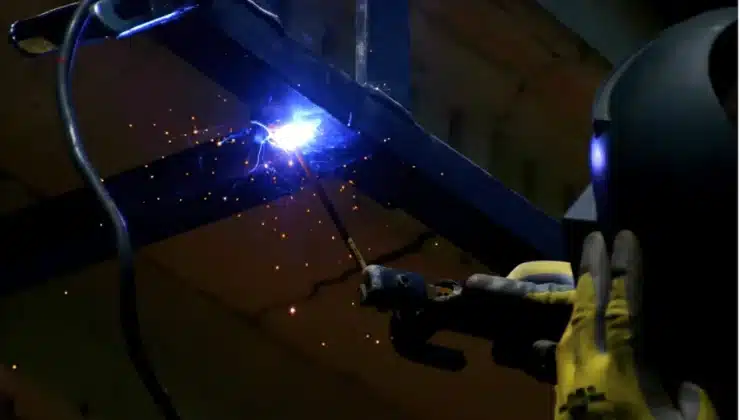
In today’s manufacturing world, the pressure to do more with less has never been greater. Companies are dealing with labor shortages, fluctuating material costs, and an ongoing need to improve efficiency. Welding, one of the most critical yet labor-intensive processes, has become a focal point for innovation.
Enter the cobot welder—a collaborative robot designed to work safely alongside human operators. Unlike traditional industrial robots that require complex setup and safety cages, cobots are flexible, affordable, and intuitive. They make automation accessible to businesses of all sizes, not just large manufacturers with deep pockets. Let’s break down the key reasons why investing in cobot welding makes sense for companies aiming to reduce costs and boost productivity.
Why Cobot Welding Makes Financial Sense
Traditional robotic welding systems often involve heavy upfront investments and complicated installation. In contrast, cobot welders are designed for simplicity, making automation more cost-effective and scalable.
Here’s how cobot welding reduces costs:
- Lower setup expenses: Cobots require minimal floor space and safety equipment, cutting installation costs significantly.
- Reduced programming time: User-friendly interfaces and hand-guiding technology make programming simple and quick.
- Lower maintenance costs: Fewer moving parts and built-in diagnostics reduce downtime and service expenses.
- Energy efficiency: Cobots consume less power, leading to long-term operational savings.
- Faster ROI: Many companies see a payback period within 12 to 18 months.
According to the International Federation of Robotics (IFR), cobots can lower automation costs by up to 30 percent compared to traditional systems. They also reduce material waste by improving weld precision—every joint is consistent, minimizing scrap and rework.
Boosting Productivity and Throughput
Welding productivity depends heavily on speed, accuracy, and consistency. Human welders, no matter how skilled, face natural limits such as fatigue, shift changes, and variations in performance. A cobot welder, however, can work continuously and maintain precision all day, every day.
Key productivity benefits include:
- Continuous operation: Cobots can run 24/7, maintaining consistent output.
- Improved cycle times: Automated motion paths ensure optimal speed and accuracy.
- Increased equipment efficiency: Manufacturers have reported up to a 50% boost in overall equipment effectiveness (OEE).
- Reduced rework: Consistent welds reduce defects and post-processing.
- Labor optimization: One operator can manage multiple cobots simultaneously.
Example:
A mid-sized metal fabrication firm integrated cobot welders into its MIG welding line. Within six months:
- Productivity rose by 40%.
- Rework dropped by 25%.
- Lead times improved by two weeks.
Beyond speed, cobot welders enhance quality consistency. They follow programmed weld paths with pinpoint accuracy, ensuring every weld meets exact specifications. This precision eliminates variability, helping manufacturers meet strict industry standards while maintaining throughput.
Addressing Labor Shortages and Safety Challenges
One of the most pressing issues facing global manufacturing today is the shortage of skilled welders. With many experienced welders nearing retirement and fewer young workers entering the trade, maintaining production levels has become increasingly difficult.
Cobot welding offers a practical solution:
- Bridges the skills gap: Cobots take on repetitive tasks, allowing skilled workers to focus on complex or high-value projects.
- Upskills the workforce: Operators can learn programming and supervision instead of performing physically demanding tasks.
- Reduces burnout: By automating monotonous processes, workers experience less fatigue and stress.
Safety is another major factor. Welding exposes workers to hazards such as intense heat, fumes, and repetitive strain. Cobot welders are equipped with advanced safety features that make them ideal for collaborative environments.
Safety benefits include:
- Built-in torque sensors that detect contact and reduce force.
- Limited speed and motion to prevent accidents.
- Reduced exposure to heat, sparks, and fumes.
- Compliance with ISO safety standards for human-robot collaboration.
By minimizing risk and supporting human workers, cobot welders create a safer, healthier, and more appealing workplace.
Flexibility and Scalability for Modern Manufacturers
In manufacturing, flexibility is power. The ability to adapt to changing demand, new products, or varying batch sizes can make or break profitability. Traditional robotic systems are rigid—once installed, they’re expensive to modify or redeploy.
Cobot welders, by contrast, are designed for adaptability.
Flexibility advantages include:
- Plug-and-play setup: Cobots can be deployed anywhere on the shop floor with minimal disruption.
- Easy reprogramming: Operators can retrain cobots for new tasks within minutes using drag-and-drop software.
- Multi-process capability: The same cobot can perform MIG, TIG, or spot welding with simple tooling changes.
- Compact footprint: Ideal for small workshops and production cells with limited space.
Scalability is equally important. Cobots allow businesses to start small and scale gradually.
Scalability advantages include:
- Start with a single cobot and expand as demand grows.
- Integrate multiple cobots into synchronized production cells.
- Maintain flexibility across high-mix, low-volume environments.
This modular approach gives manufacturers greater control over costs and automation levels, enabling them to grow sustainably without large capital commitments.
Real-World Impact and Proven ROI
Cobot welding isn’t just a futuristic idea—it’s already transforming industries like automotive, aerospace, and metal fabrication. Companies that have adopted cobots are seeing real, measurable results.
Industry data highlights the impact:
| Metric | Before Cobot Welding | After Cobot Welding |
| Labor costs | High and variable | Reduced by up to 40% |
| Rework rates | Frequent defects | Reduced by 25–50% |
| Production uptime | Limited to human shifts | 24/7 continuous operation |
| Payback period | 3–5 years | 12–18 months |
Additional performance outcomes:
- 30% lower energy consumption.
- 20–50% improvement in production efficiency.
- Up to 70% fewer welding-related injuries.
These figures demonstrate that cobot welders deliver not only technical precision but also a clear financial return. The ability to standardize quality, reduce waste, and scale production allows companies to compete more effectively in global markets.
Overcoming Common Adoption Barriers
While the benefits of cobot welding are clear, some manufacturers still hesitate due to misconceptions about cost, complexity, or workforce resistance. In reality, modern cobots are engineered for simplicity and accessibility.
Key facts about adoption:
- Short learning curve: Operators can be trained to program a cobot within days, not months.
- Fast implementation: Most systems can be installed and running within a week.
- Low maintenance: Built-in sensors and diagnostics help detect issues before they cause downtime.
- Collaborative integration: Cobots can share workspace with humans safely, without major layout changes.
Tips for a smooth transition:
- Start small—automate one high-volume welding task first.
- Train current employees to manage and program cobots.
- Measure performance data early to demonstrate ROI.
- Gradually expand automation once the team gains confidence.
With proper planning, cobot integration can be both seamless and transformative. Manufacturers often find that initial skepticism fades quickly once teams experience the efficiency and safety benefits firsthand.
The Bigger Picture: Sustainability and Workforce Evolution
Beyond the financial and operational benefits, cobot welding supports broader industry goals like sustainability and workforce development.
Environmental advantages:
- Reduced material waste due to precise welding paths.
- Lower energy consumption compared to conventional automation.
- Consistent quality reduces scrap and rework, cutting carbon impact.
Workforce transformation:
- Shifts welding from a physically demanding trade to a tech-enabled profession.
- Encourages continuous learning and digital skill development.
- Improves job satisfaction by removing monotonous, high-risk tasks.
Cobot welders don’t replace human expertise—they amplify it. By handling the repetitive aspects of production, they allow workers to focus on innovation, supervision, and quality improvement.
Denaliweld cobot welders are lightweight, flexible, and intelligent robotic welding solutions designed for speed, safety, and user-friendliness. These collaborative robots can be quickly taught specific welding applications—such as railings, shelves, and stainless steel furniture—helping businesses increase precision and free skilled staff for other critical tasks.
Conclusion
The business case for cobot welding is clear and compelling. It combines cost reduction, productivity gains, workforce safety, and scalability into a single, efficient solution. Cobot welders empower manufacturers to overcome labor shortages, improve output quality, and adapt quickly to changing demands—all while lowering operational costs.
In a world where every second and every weld count, investing in a cobot welder is not just about automation—it’s about transformation. It’s a move toward smarter, safer, and more sustainable manufacturing that balances human skill with robotic precision.
As industries continue to evolve, the companies that harness the potential of collaborative automation will lead the next era of manufacturing innovation—stronger, faster, and more efficient than ever.